Our Projects
Our Work in Action
ConsumerCentriX partners with leading institutions to design and implement strategies that strengthen financial systems, support entrepreneurship ecosystems and empower unserved & underserved populations.
Current Projects

Small and medium enterprises play a central role in economic growth, yet many financial institutions continue to face challenges in serving them in a consistent and commercially sustainable way. These challenges often stem from limited market insight, weak segmentation, and business models that are not well aligned with the diversity of SME needs.
The INVEST SME Banking Toolkit was developed to respond to these challenges by offering a clear and structured lens on SME banking. Developed by ConsumerCentriX in partnership with Dalberg, with funding from the Argidius Foundation and the SME Finance Forum as implementation partner, INVEST is designed to help financial institutions better understand their SME markets and think more clearly about how they structure and grow their SME businesses.
The toolkit is organized around six drivers of SME banking success. Together, these drivers provide a practical way for institutions to assess the SME opportunity, refine customer targeting, and examine how well their value propositions align with different SME segments. Rather than prescribing solutions, INVEST serves as a reference point that institutions can use to test assumptions, identify gaps, and strengthen internal discussions around SME strategy.
A central feature of the toolkit is its emphasis on data-informed decision-making. INVEST supports financial institutions in examining how SME data is collected, analyzed, and used across the organization. By strengthening this foundation, institutions are better positioned to understand portfolio performance, differentiate between SME segments, and align strategy, products, and processes more coherently.
The toolkit has also been used as part of broader learning initiatives aimed at senior banking leaders. In 2025, ConsumerCentriX contributed to the SME Finance Forum’s SME Banking Masterclass, where leaders from more than 200 financial institutions explored how clearer business models and more effective segmentation can support SME portfolio performance. Within this context, the INVEST Toolkit was used to illustrate how SME data analytics can inform portfolio understanding and value proposition design.
INVEST was first introduced in December 2025, with an initial focus on financial institutions in Latin America and Europe. A subsequent launch planned for late January 2026 will extend its reach to Africa and Asia, reflecting the toolkit’s relevance across a wide range of SME banking contexts.
Overall, the INVEST SME Banking Toolkit provides a structured way for financial institutions to reflect on their SME strategies. It offers a common language and framework that can support more deliberate, data-informed conversations about how to move from broad, generic SME offerings toward approaches that are commercially viable and better aligned with the realities of SME clients.

Across emerging markets, women-owned and women-led small businesses play a central role in job creation and economic growth. Yet most institutions still view them as one broad category. The common approach of segmenting by business size may be simple to apply, but it does not reveal how women run their businesses, what motivates them, or what holds them back.
The WSME Segmentation Framework and Toolkit was designed to fill this gap. Developed by ConsumerCentriX in partnership with the Argidius Foundation, the Dutch Good Growth Fund and the Women Entrepreneurs Finance Initiative, it offers a practical way for institutions to understand the diversity within the WSME market. The framework is grounded in primary research with more than 600 formal WSMEs from Pakistan, Uganda and Colombia. These three countries were selected to reflect very different economic and regulatory environments, allowing the framework to be used widely across emerging markets.
Across the three countries, the research revealed a clear trend. Expected revenue growth over the next five years is a much stronger differentiator than enterprise size. Once women entrepreneurs were grouped by their projected growth, several patterns became obvious. Their business models, financial behaviour, support needs and operating environments differed enough to require a more precise approach. This analysis resulted in three growth segments: high growth, moderate growth and low growth.
Within each of these segments, the framework identifies six entrepreneur profiles that reflect different motivations and ways of running a business. For example, some high-growth entrepreneurs focus on wealth creation while others focus on building a long-term family legacy. Moderate-growth entrepreneurs balance ambition and stability, and those in the lower-growth group often run businesses that prioritise income security rather than scale. Each profile has distinct financial and non-financial needs.
Another important output of the research is the set of 15 business growth enablers. These include factors such as access to collateral, digital adoption, family support, business skills and the strength of an entrepreneur’s networks. They consistently differentiate one group from another and help institutions understand what is required to move a business from one stage of growth to the next.
The team also analysed the enabling environment in each country. This included legal and regulatory frameworks, gender norms, the sophistication of the financial sector, ease of doing business and digital infrastructure. The Toolkit translates this into a structured diagnostic process that institutions can apply in their own markets.
In addition, the research looked at the role of WSMEs in job creation. Across the three countries, women-led businesses employ a higher share of women compared to male-led firms, and most entrepreneurs expect this trend to continue. The hiring patterns differ across segments. High-growth businesses build larger and more structured teams, while lower-growth firms rely more heavily on temporary labour.
The Toolkit converts all these insights into a practical six-step process that helps users assess the environment, map existing financial and non-financial offerings, understand actual demand, segment clients with the 15 enablers, review their portfolio and size the market to build a solid business case. The tools were created for financial intermediaries, funders, business support organisations and regulators who want to strengthen how they serve women-led businesses.
Since the release of the framework, dissemination has taken place through a range of events, conversations and trainings. Early insights were shared through public posts and blogs that introduced the six profiles and explained the shift toward a growth-oriented approach. The team presented the research during sessions at the Global SME Finance Forum, where banks, development partners and technical providers discussed how the toolkit can inform product design, business support services, outreach strategies, risk management and overall strategy. Interest was strong and several institutions expressed interest in testing elements of the toolkits in their own markets.
The official launch, organised with We-Fi, the Argidius Foundation and the Dutch Good Growth Fund, brought together policymakers, practitioners and researchers for a deeper conversation on the shift from size-based segmentation to a growth-focused approach. The discussion drew on practical experiences from Uganda, Pakistan and Colombia and highlighted the importance of designing solutions that reflect the actual needs of women entrepreneurs rather than assumptions about them.
These activities are part of a broader effort to help institutions integrate segmentation into their strategic planning and operations. The expectation is that a more granular approach will support better product design and stronger business models for financial institutions and support organisations, while offering women entrepreneurs services that are more aligned with their realities.
The full framework and toolkit are available at wsmesegmentation.com. As more institutions begin to explore how segmentation can strengthen their value propositions, the guiding question remains the same: What enables her business to grow and how can we respond to it more effectively?

Women-led enterprises remain consistently underserved by financial systems across regions. This is not due to a lack of recognition of their economic potential, but rather to structural gaps in how financial institutions track, understand, and respond to women entrepreneurs as a market segment. The WE Finance Code was developed to address this challenge by introducing a shared framework for accountability, data use, and action across the financial ecosystem.
ConsumerCentriX supports the implementation of the WE Finance Code across multiple markets, working with regulators, financial service providers, and ecosystem partners to turn commitments into operational change. Rather than approaching the Code as a standalone pledge, our work focuses on embedding its principles into the everyday systems and decision-making processes of financial institutions.
Across countries, one reality has become clear. Most institutions do not struggle with intent. They struggle with execution. Gender-disaggregated data may exist, but it is often incomplete, inconsistently reported, or disconnected from core business and policy processes. In many cases, data is collected for compliance purposes but not used to inform strategy, product design, or performance management. The result is a persistent gap between commitment and impact.
Implementation of the WE Finance Code helps close that gap by shifting attention from isolated initiatives to coordinated, system-level change. Coalition-based approaches bring regulators, banks, and other stakeholders together around shared expectations for data quality, reporting standards, and institutional accountability. This collective structure has proven essential in moving markets beyond awareness toward practical, sustained action.
A central pillar of CCX’s work has been strengthening gender-disaggregated data systems. Reliable data is not an end in itself. It is the foundation that allows institutions to understand where women-led enterprises are being excluded, how products are being used, and where opportunities for growth exist. Improving data quality and consistency enables both regulators and financial institutions to track progress credibly and to align interventions with real market behavior.
At the same time, data alone is not enough. Effective implementation requires institutional capacity and coordination. CCX supports ecosystem players in aligning incentives between public and private actors, clarifying roles within WE Finance Code coalitions, and translating high-level commitments into internal processes. This includes helping institutions integrate gender considerations into product development, risk assessment, and performance frameworks, rather than treating women-led enterprises as an add-on segment.
Another consistent lesson across markets is the importance of framing women-led enterprises as a strategic growth opportunity. Where financial institutions view inclusion primarily through a social lens, initiatives tend to remain small or short-lived. Where the business case is clearly articulated and supported by data, institutions are more likely to invest, scale, and sustain their engagement. The WE Finance Code provides a structure for making that shift, but it is the implementation work that brings it to life.
As the WE Finance Code continues to expand, it is increasingly functioning as a shared global platform rather than a collection of country-specific initiatives. While market contexts differ, common patterns are emerging around what enables progress. Strong data systems, coordinated coalitions, and a clear link between inclusion and commercial strategy consistently underpin more durable outcomes.
For funders, regulators, and financial service providers, these experiences point to an important conclusion. Advancing finance for women-led enterprises is less about launching new commitments and more about operationalizing existing ones. When data, collaboration, and institutional incentives are aligned, inclusive finance becomes both sustainable and scalable. Through its implementation work, CCX is supporting markets in making that shift, helping lay the groundwork for financial systems that engage women-led enterprises as a core part of their growth strategy.
WE Finance Code countries supported by ConsumerCentriX
Uzbekistan, Mongolia, Pakistan, Nigeria, Uganda, Kenya, Dominican Republic, Kyrgyzstan, Tajikistan: Launched – Implementation underway

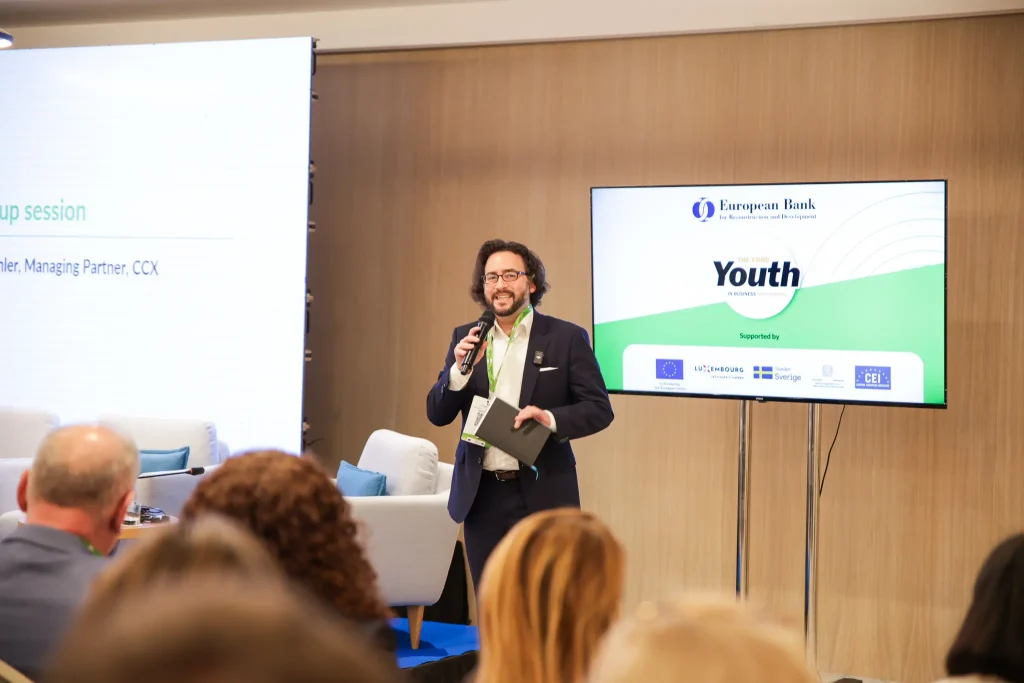
Youth entrepreneurs face a complex set of challenges. Many are starting businesses for the first time. They often lack credit history, digital skills and access to networks that can help them grow. Yet they represent one of the most dynamic sources of economic potential across emerging markets.
The Youth in Business programme was created to help financial institutions respond to this opportunity with solutions that are both commercially sound and relevant to the realities of young entrepreneurs. The programme brings together evidence-based insights, tailored product design and hands-on non-financial services to support youth as they take their first steps into business ownership.
Over the years, Youth in Business has grown from a regional pilot into a multi-country platform that helps banks and microfinance institutions build sustainable youth banking models. In partnership with the European Bank for Reconstruction and Development and IPC, the programme now operates across the Western Balkans and has expanded into Türkiye and Morocco, where it continues to support new partner institutions.
This expansion has opened the door for cross-market learning. Participating financial institutions explore how to combine financing with capacity building and digital support, creating youth segments that are flexible enough to serve first-time borrowers and structured enough to ensure commercial viability.
Innovation in non-financial services is a core part of the programme. In 2025, Youth in Business introduced AI Bootcamps in Agadir and Marrakech, offering young entrepreneurs practical experience with tools that can streamline operations, improve marketing and strengthen customer engagement. These sessions showed how technology can help level the playing field for youth led businesses, providing skills that directly influence business performance.
Alongside training, the programme continued to mobilize significant financing for youth entrepreneurship. By the end of 2025, partner institutions had disbursed more than nineteen million euros to over one thousand seven hundred young clients. Several partners secured new or follow-on credit lines, and the first Moroccan financial institution joined the network, signalling growing confidence in the youth segment across diverse markets.
A notable outcome emerging from the programme is the multiplier effect. As youth led enterprises become stronger and more resilient, many create opportunities for other young people, either through new jobs or collaborative ventures. The benefits extend beyond individual entrepreneurs and into the broader ecosystem.
What sets Youth in Business apart is its integrated approach. The programme encourages financial institutions to view youth not only as borrowers but as future market builders. It supports institutions in designing youth focused business models that blend financial and non-financial services, strengthen internal capacity and anchor long-term engagement with the segment.
As the programme continues to grow, it is helping shape a future where youth entrepreneurship contributes meaningfully to inclusive, resilient and innovation driven economies. With the right mix of financing, digital learning and institutional commitment, young entrepreneurs can become a powerful force for economic transformation.
Youth in Business implementation countries supported by ConsumerCentriX

For years, many countries have invested in sex-disaggregated reporting, yet the gap between collecting data and using it to advance women’s financial inclusion has remained wide. Templates get filled out, spreadsheets are emailed, and PDF tables are published, but the insights rarely travel far enough to influence strategy or shape policy. Without practical tools to analyze and visualize data, women’s financial behavior remains poorly understood and the business case for serving them remains underdeveloped.
In Nigeria and Bangladesh, that pattern is starting to shift. Through the partnership between the Financial Alliance for Women and ConsumerCentriX, regulators in both countries have spent the last several years moving from fragmented reporting systems to national gender data dashboards that help translate data into action. The work builds on earlier diagnostics under the WFID Partnership, which highlighted inconsistent data use, limited granularity, and ongoing analysis bottlenecks across multiple markets.
The starting point in both countries was a clear understanding of the gender data ecosystem. Mapping existing reporting streams revealed how many institutions were collecting relevant data and how disconnected those sources were. In Nigeria, for example, the Central Bank discovered that two major datasets needed for the dashboard were held by the national interbank settlement system. Only after sustained engagement did both institutions formalize data sharing agreements and begin addressing security protocols and reporting standards. This type of alignment created the foundation for a national dashboard that could offer a real-time view of financial inclusion by gender.
Bangladesh Bank followed a similar trajectory. For years, the regulator had already been publishing sex-disaggregated data but only through individual PDF tables. Users had to extract figures by hand before running even basic analysis. The dashboard changed that completely. It now centralizes the full set of reported data, allowing users to explore patterns by gender, age, region, channel, and business size. The shift from static tables to a living analytical tool has made it possible to understand trends that were previously hidden.
Nigeria’s first dashboard version shows the impact of this approach. The tool merges three previously separate datasets and produces a unified view of financial inclusion by gender. Even the early pilot, which focused on high-level account ownership, offered insights that policymakers had not been able to access before. By linking account information to unique identification numbers, the dashboard avoids double counting and presents a more accurate picture of individual customers across the financial system.
One important lesson from these experiences is that the technology itself is not the breakthrough. Tools like Tableau, which both countries used, are widely accessible. The real shift comes from strengthening the underlying processes: securing buy-in across institutions, improving data pipelines, transitioning from aggregated templates to individual-level data, and establishing cross-department working groups to oversee the work. These steps represent a change in how institutions view gender data, treating it as a strategic asset rather than a compliance requirement.
Both countries have now moved into the stage where dashboards are used widely and updated regularly. Bangladesh launched its dashboard during its International Women’s Day celebrations in March 2024 and followed the event with a training session that brought together 150 participants from financial service providers. The team is already planning to expand the dashboard to include data from insurance and microfinance regulators and to move further toward individual-level reporting. Nigeria launched its first iteration in November 2024 and has since created an oversight committee to guide future development, including the integration of new data sources and additional analytical features.
These efforts support broader commitments under the WE Finance Code, where gender data plays a central role in tracking progress and measuring the impact of policies and products. With stronger data systems in place, both countries are now better positioned to design evidence-based strategies for women’s financial inclusion and to support financial service providers that want to build or expand their women-centered offerings.
The work is also generating interest from other regulators that want to follow a similar path. From the outset, the FAWDAT project aimed to establish Nigeria and Bangladesh as demonstration cases that could inspire broader adoption of robust gender data systems across more markets.
For funders, financial service providers, and practitioners, the experience from these two countries offers two clear insights. First, it is possible to close gender data gaps when institutions commit to strengthening reporting systems and making data easier to use. Second, dashboards should be seen not as final products but as catalysts. Their real value comes from how institutions use them to identify barriers, test solutions, and strengthen the business case for serving women.
As more countries begin to adopt similar models, the opportunity is significant. Real-time, reliable gender data can help close long-standing knowledge gaps, improve policy design, and support financial institutions that want to reach women more effectively. With the right investment and collaboration, dashboards like those in Bangladesh and Nigeria can help create financial systems that finally see and serve women more fully.

Authors: Anna Gincherman, István Szepesy, Laura Trueba
Partners: IDB Invest
Year: 2023
Across Latin America and the Caribbean, women are becoming an increasingly influential force in household finances, entrepreneurship, consumption, and the broader economy. Yet financial institutions often underestimate the size and potential of the women’s market or treat it as a single, uniform group.
“Women Rising: A study of the growing financial power of the women’s market in LAC, and what this means for financial institutions” examines how women across Latin America and the Caribbean are shaping the region’s economies as earners, consumers, savers, and business owners. Their financial influence continues to grow, yet many institutions still overlook the size and complexity of this market or treat women as a single segment. The study unpacks these dynamics and highlights what they mean for providers aiming to serve women more effectively.
The publication looks at the demographic, behavioural, and economic trends behind women’s rising financial power. It explores shifts in employment, income generation, household decision-making, and entrepreneurship, as well as the persistent barriers that limit women’s ability to access and benefit from financial services. The research illustrates how these factors translate into a wide range of financial behaviors and needs across different groups of women in the region.
The findings point to a market that is both significant and diverse. While women in LAC are advancing educationally and economically, many still navigate challenges related to informality, income volatility, caregiving responsibilities, and limited access to tailored business support. These factors create distinct customer segments and clear opportunities for financial institutions to design more targeted value propositions that respond to women’s real financial journeys.
Developed by ConsumerCentriX on behalf of IDB Invest, Women Rising offers evidence-based insights that can support institutions looking to grow sustainably while strengthening inclusion. ConsumerCentriX contributed to the research and analysis, helping bring greater clarity to the women’s market in LAC and the strategic opportunities it represents for the financial sector.