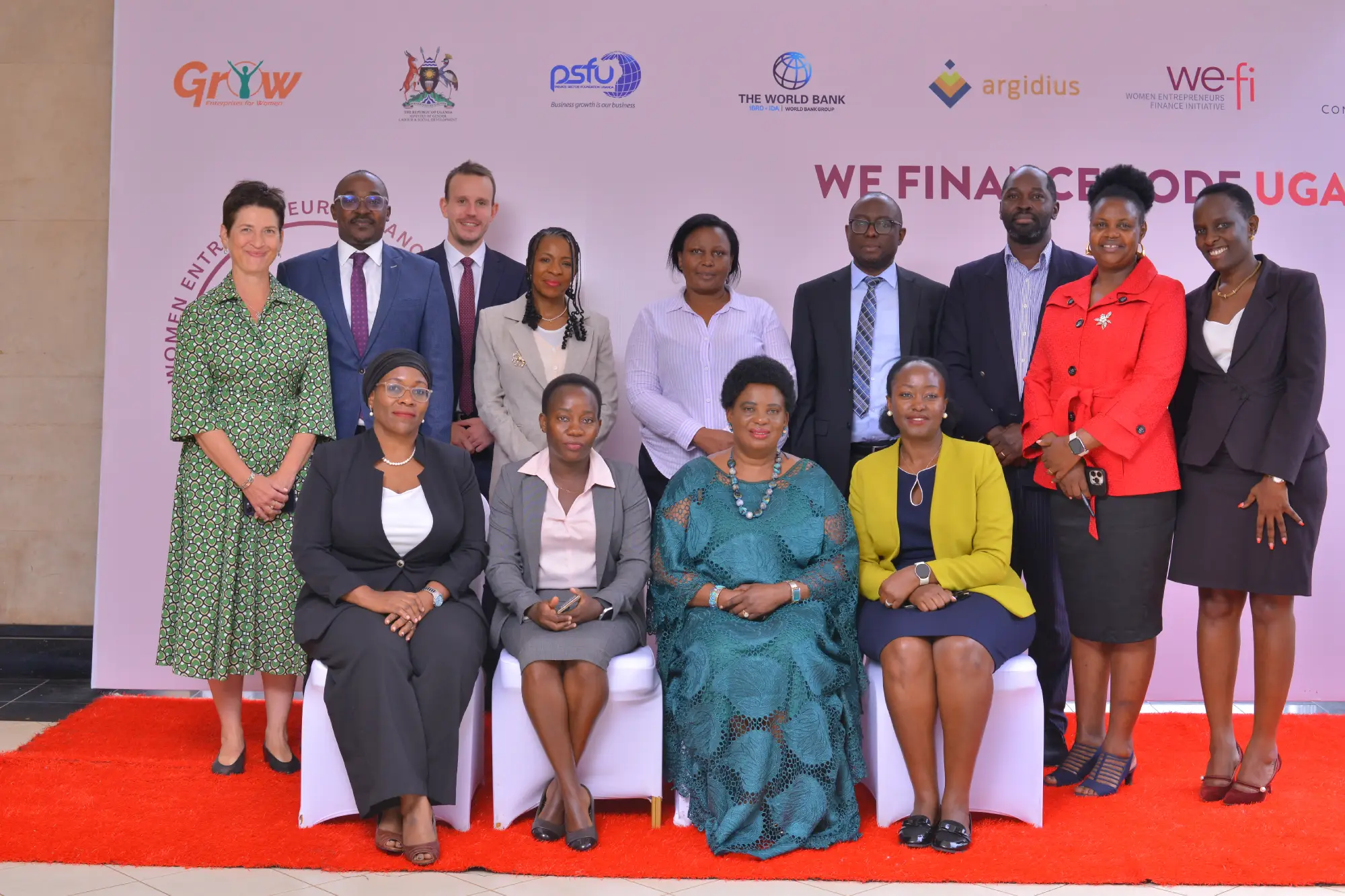

Ugandan stakeholders have taken a bold step in their journey to become a signatory of the Women Entrepreneurs Finance Code (WE Finance Code), by convening a sensitization workshop that brought together 26 Commercial Banks, 35 Micro Finance Institutions (MFIs), representatives from the Central Bank – Bank of Uganda (BOU), representatives from the country’s Parliament, the FinTech Association and representatives from development partner institutions, to understand what the Code is, and the nature of commitment required for national champions and coalition partners to pledge to increasing access to capital for Women Small and Medium Enterprises (WSMEs).
The meeting was convened by the World Bank Funded GROW Project, alongside the Ministry of Gender, Labor and Social Development (MOGLSD), Private Sector Foundation Uganda (PSFU), Bank of Uganda (BOU), Uganda Bankers Association (UBA) and Association of Microfinance Institutions in Uganda (AMFIU).
ConsumerCentriX facilitated the technical discussions that are central to the code, including The Strategic and Business Case for Serving WMSMES, Benefits of implementing the WE Finance Code Initiative In Uganda, and the Critical importance of sex-disaggregated SME data – a central element of the code and its implementation.
Stakeholders made a commitment toward actions that will enable Uganda join over 31 countries around the world that have already signed the code, including Rwanda, Tanzania, and Kenya, within the East African region. Stakeholders recognized the vital role WSMEs play in driving business growth, job creation, and economic development, and the challenge around insufficient collection, quality, and use of sex disaggregated data that plays a major role in sustaining the gender gap in financial services and access to capital for WSMEs.
“The first barrier [to access to capital] for women is poverty…” Minister of Gender, Labor and Social Development, Hon. Amongi Betty Ongom remarked and committed that her Ministry will support the We-Fi Code initiative as this will cause a shift in financial policies that increase access to capital for women. The Uganda Bankers’ Association (UBA) committed to championing the Women Entrepreneurs Finance Code (WE-Fi Code) in Uganda, as it is aligned with their Women Economic Empowerment Initiative (WEEI), that aims to position its member institutions as leaders in supporting women entrepreneurs and to drive data-driven decisions that improve financial services for WMSMEs.
The Association of Micro Finance Institutions in Uganda (AMFIU) also committed to championing the Code by ensuring it is fully integrated within SACCOs, MFIs, and other financial institutions across Uganda through leveraging their national network to turn the Code into a living instrument that unlocks finance, growth, and dignity for millions of women entrepreneurs who are the backbone of Uganda’s economy. The Bank of Uganda (BOU) highlighted their current investment in big data initiatives that directly align with the Code’s emphasis on data – not only to support evidence-based policymaking and regulatory oversight but also enable financial institutions to design products that better meet the needs of women entrepreneurs. The Bank of Uganda committed to working with all partners to translate the WE-Fi Code into measurable action, unlocking finance, driving innovation, and accelerating inclusive growth. The meeting gained consensus on what it will take for Uganda to launch the code, with commitments from key coalition and partner institutions emphasizing the collaborative efforts required through public and private partnerships. ConsumerCentriX is supporting Uganda’s implementation of the code.