
In the Dominican Republic, micro, small, and medium-sized enterprises (MSMEs) play a significant role in economic growth and employment rates, comprising 99% of all businesses and generating over half of the country’s jobs. Despite this, MSMEs face disparities in accessing financial services and resources. In particular, female-owned micro, small, and medium-sized enterprises (WMSMEs) struggle to access the needed services.
To address this, The Superintendent of Banks (SBDR) has mandated Financial Service Providers (FSPs) to collect and report sex-disaggregated data for individuals and commercial businesses. SBDR has partnered with other public institutions to align on the segmentation of businesses and, as a result, published the country’s first MSME dashboard in 2024, allowing them to enhance their understanding of credit offered to different MSME segments and identify gender gaps in access. However, challenges persist in collecting quality data and a standardized definition of WMSMEs. Findings from the IDB Invest and ConsumerCentriX Study revealed that 62% of banks collect sex-disaggregated, with 50% registering WSME data for their product offerings, indicating a need for further improvement in data collection practices.
Recognizing the necessity to address these challenges, IDB Invest, the private sector window of the Inter-American Development Bank Group, recruited ConsumerCentriX and the Financial Alliance for Women (FAFW) for the implementation of the Women Entrepreneurs Finance Code in the Dominican Republic. This pilot is private-sector led, which means that through key private sector partners, including the Banking Association and key FSPs, the project has the aim of reaching an industry-wide capacity to both disaggregate data by sex, and improve financial services for women entrepreneurs.
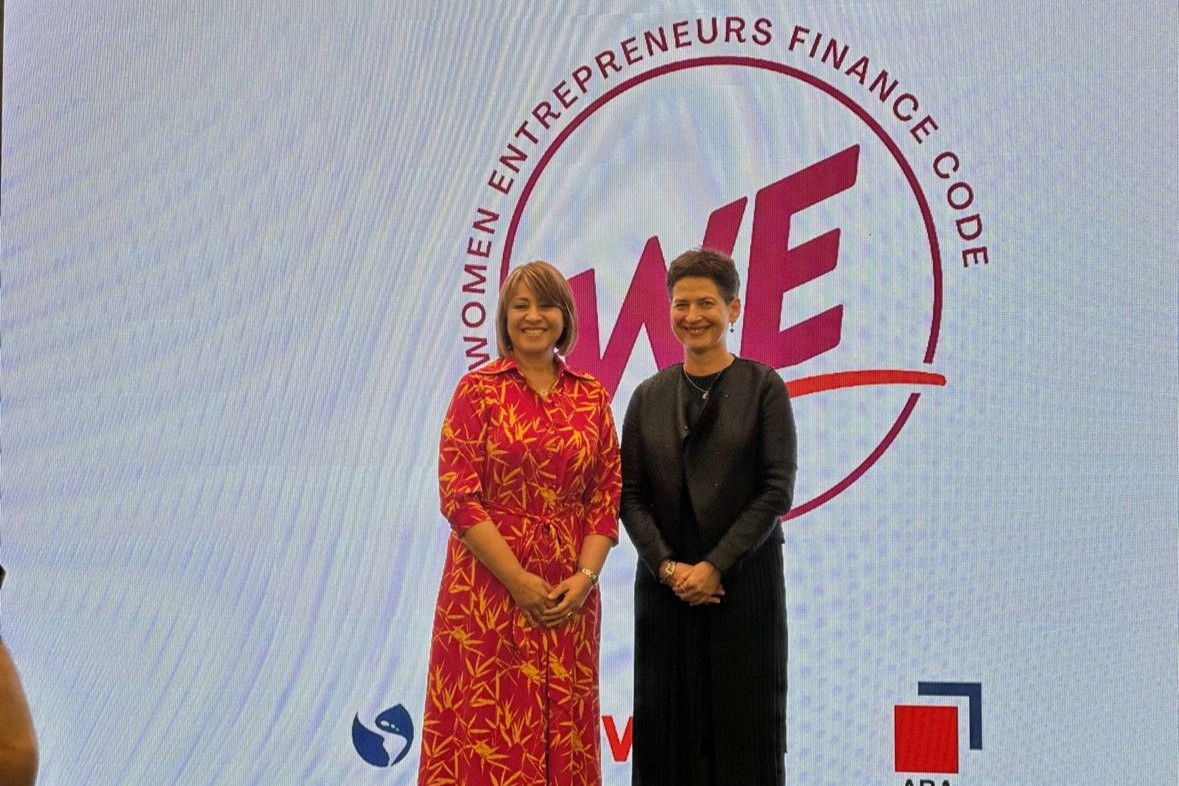
The WE Finance Code or the Code is a commitment by FSPs, regulators, and other financial ecosystem stakeholders to work together to increase funding and support to women-led micro, small, and medium entrepreneurs. The project is a timely initiative since the Code has already gained much-needed momentum following its successful launch at the FAFW Summit in November 2023, where key stakeholders in the country’s financial sector, including regulators, associations and FSPs, committed to the Code by signing the letter of intent.
The project involves building the capacity of the national coalition consisting of the local aggregator and coordinator of the Code, Bankers Association “Asociación de Bancos Múltiples de la República Dominicana” (ABA) and FSPs to execute the Code commitments. This will be achieved by supporting ABA in aggregating, analyzing, and visualizing the collected WMSME data, as well as supporting FSPs in collecting quality data on WMMSEs and using it to develop holistic propositions tailored to addressing the needs of women entrepreneurs.
The initial signatories to the Code include multiple banks such as BHD, Popular, Banreservas, Caribe, Scotiabank, Banesco, JMMB Bank, LAFISE, Promerica, Santa Cruz, Vimenca, and ADEMI, along with savings and credit banks like ADOPEM and Confisa. Also participating from the government sector in this initiative are the Central Bank, the Superintendency of Banks, and the Ministry of Industry, Commerce, and MSMEs. These entities play significant roles in the crucial aspects of the project’s execution and regulation.
The Code in the Dominican Republic is a pioneering initiative at the regional level that will establish guidelines for implementation in other countries on the continent. The project seeks to position the Dominican Republic as a model for other countries by documenting best practices through case studies and creating tools for other nations to learn from and develop their Codes.